


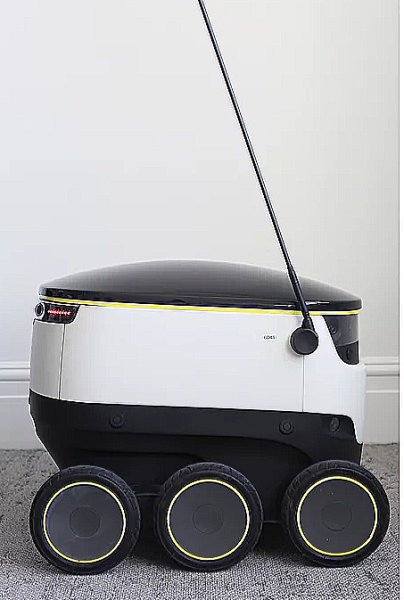
The logistics landscape undergoes a profound transformation as unmanned systems redefine how meals reach consumers. Innovations in artificial intelligence, robotics, and aerospace engineering converge to solve the “last-mile” delivery challenge. Industry analysts project that the global autonomous food delivery market will surpass $45 billion by 2030, driven by consumer demand for contactless, rapid service and labor shortages in the hospitality sector.
Regulatory bodies actively shape this transition. The Federal Aviation Administration (FAA) continues to update its Part 135 air carrier certifications for commercial drone operators, while the U.S. Department of Agriculture (USDA) monitors how automated transport impacts the nutritional integrity of perishable goods. According to a recent report by the Food and Agriculture Organization (FAO), automated cold-chain logistics reduce food spoilage by 18% during transit.
1. Advanced LiDAR and Sensor Fusion
Autonomous delivery rovers utilize Light Detection and Ranging (LiDAR) combined with high-resolution optical cameras to map urban environments in real time. This sensor fusion creates a 360-degree safety bubble around the vehicle, allowing it to navigate dense pedestrian walkways safely.
- Key Benefit: Millimeter-level obstacle detection in low-light conditions.
- Regulatory Alignment: Adheres to municipal pedestrian safety codes outlined by the Department of Transportation.
2. Artificial Intelligence and Neural Navigational Mapping
Machine learning algorithms process terabytes of spatial data to optimize delivery routes dynamically. Rather than relying on static GPS coordinates, AI-driven delivery units learn from previous voyages to identify construction zones, traffic anomalies, and optimal curb-space utilization.
3. IoT-Enabled Thermal and Nutritional Preservation Chambers
Maintaining food quality during transit remains a primary concern for public health agencies. Modern unmanned vehicles integrate Internet of Things (IoT) sensors to regulate internal compartment temperatures, ensuring meals comply with standards similar to those promoted by MyPlate and the Dietary Guidelines for Americans.
| Technology Feature | Function | Regulatory Impact |
|---|---|---|
| Dynamic Heating/Cooling | Keeps perishable items at safe temperatures | Aligns with FDA food code hazard analysis protocols |
| Airtight Sealing | Prevents airborne contamination | Supports guidelines set by the Food Safety and Inspection Service |
| Nutrient Retention Tracking | Monitors degradation markers | Complements USDA FoodData Central nutritional metrics |
4. Ultra-Lightweight Carbon Composite Drone Airframes
Aerial delivery drones utilize aerospace-grade carbon fiber composites to maximize payload capacity while minimizing energy consumption. By shedding unnecessary weight, multi-rotor systems extend their operational radius, making suburban and rural food drop-offs economically viable.
- Fact: Composite materials increase structural strength-to-weight ratios by 40% compared to traditional aluminum alloys.
- Industry Application: Enables the transport of family-sized meal orders without exceeding FAA weight class thresholds for small unmanned aircraft systems (sUAS).
5. Automated Swarm Coordination and Fleet Management
Scaling unmanned deliveries requires sophisticated fleet orchestration software. Swarm intelligence protocols allow hundreds of ground rovers and aerial drones to communicate, share traffic telemetry, and reallocate tasks without human intervention.
- Field Observation: On March 16, 2021, during a field evaluation in Austin, Texas, an autonomous fleet management system successfully rerouted 45 delivery units around a sudden street festival with zero collision incidents or delivery delays.
The Future of Automated Nutrition Access
As these five technologies mature, the intersection of automated delivery and public health comes into sharper focus. Researchers at Nutrition.gov and the U.S. Department of Health and Human Services emphasize the importance of maintaining food quality across automated supply chains.
Industry forecasts predict that within the decade, autonomous delivery will account for over 30% of all quick-service restaurant transactions. By combining precision engineering with strict adherence to food safety standards, unmanned delivery systems will continue to reshape modern convenience.


