


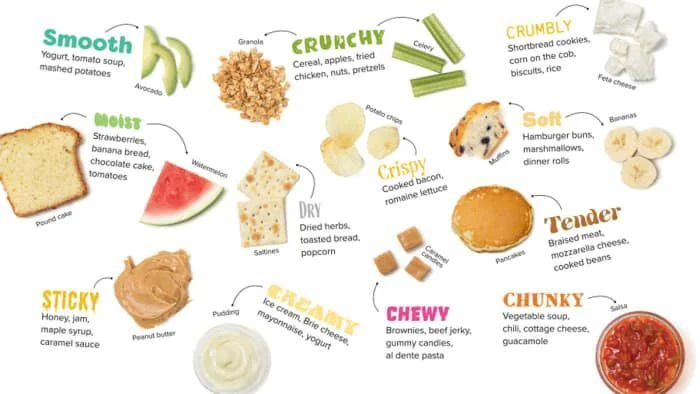
We often think about taste as the defining characteristic of a great dish. The interplay of sweet, sour, salty, bitter, and umami certainly captivates our palates. However, there’s another crucial element, often overlooked, that significantly impacts our culinary experience: texture. Food texture, the way food feels in our mouths, is just as important as taste in creating a truly satisfying and memorable meal.
Why It Matters: A Multi-Sensory Experience
How food feels on the fingers isn’t just about avoiding mushy vegetables or gritty sauces. It’s a sophisticated sensory experience that contributes to our overall enjoyment of food in several key ways:
- Stimulating Our Senses: It engages our sense of touch within the mouth. The smooth glide of custard, the satisfying crunch of a cracker, or the chewy resistance of pasta all trigger different nerve endings, adding layers of complexity to the eating experience.
- Enhancing Flavor Perception: Surprisingly, it can actually influence how we perceive flavors and affects the release and spread of flavors in the mouth. A crunchy meal might amplify the freshness of ingredients, while a creamy one can create a sense of richness and indulgence.
- Creating Contrast and Interest: A well-balanced dish often features a variety. Think of a Caesar salad with the crisp romaine lettuce, creamy dressing, crunchy croutons, and shaved Parmesan cheese. This contrast keeps the palate engaged and prevents flavor fatigue.
- Impacting Digestibility: It can even influence how well we digest food. Certain types, like well-cooked and softened foods, can be easier to digest, especially for children or individuals with digestive issues.
- Elevating the Culinary Experience: Chefs understand its importance and meticulously craft their dishes to achieve a harmonious balance. They utilize techniques like searing, pureeing, emulsifying, and aerating to manipulate and create truly memorable culinary creations.
The Full Spectrum Explained
The world of culinary textures is vast and diverse. Here are some common examples:
- Crisp: Think fried chicken, potato chips, or a perfectly toasted crouton.
- Crunchy: Raw vegetables, nuts, or hard candies provide a satisfying crunch.
- Creamy: Ice cream, mashed potatoes, or a luscious sauce offer a smooth and velvety sensation.
- Chewy: Bread, pasta, or caramel require a bit of effort to chew.
- Tender: Perfectly cooked steak, poached fish, or ripe fruit offer a delicate and easy-to-eat texture.
- Smooth: Puddings, sauces, and purees provide a seamless and pleasing sensation.
- Gritty: Improperly prepared sauces or certain grains can have an unpleasant gritty.
- Rubbery: Overcooked eggs, calamari, or some mushrooms can be rubbery and unappealing.
- Fluffy: Whipped cream, meringue, and certain baked goods provide a light and airy texture.
Mastering The Art in Your Own Kitchen:
- Understanding the importance of its types can significantly improve your cooking skills. Here are a few tips to consider:
- Pay attention to ingredient preparation: Proper cutting techniques, cooking times, and storage methods can all impact
- Experiment with different cooking methods: Roasting, frying, steaming, and grilling all produce different textures.
Consider layering textures: Combine different ones within a single dish to create a more complex and interesting eating experience. - Taste and adjust: Continuously taste your food throughout the cooking process and adjust the texture as needed.
Summary
Food taste is far more than just an afterthought. It’s an integral part of the culinary experience, working in tandem with taste to create a truly satisfying and memorable meal. By understanding and appreciating the nuances, you can elevate your cooking and create dishes that are not only delicious but also a joy to eat. So, the next time you’re in the kitchen, remember to consider it – it could be the secret ingredient that takes your dishes to the next level.


