


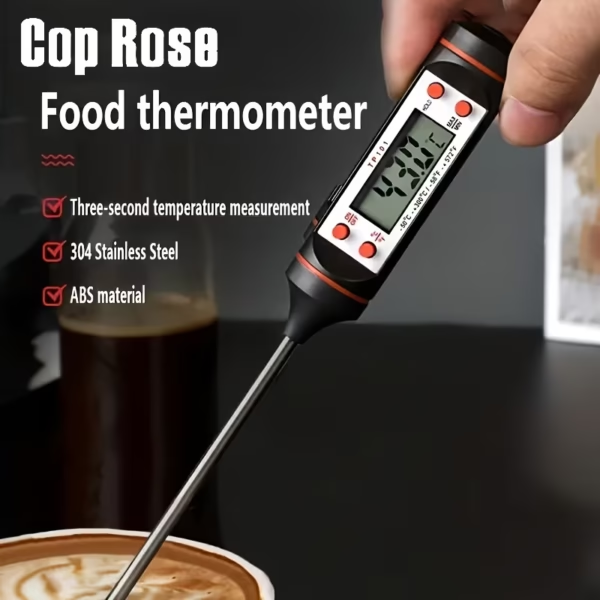
How do you know when meat is fully cooked?
You can tell by the temperature. Here is a guide.
| Meat Type | Target Temperature | Resting Period |
|---|---|---|
| Poultry (Whole or Ground) | 165°F (74°C) | None required |
| Ground Beef, Pork, Lamb | 160°F (71°C) | None required |
| Steaks, Chops, Roasts (Beef/Pork) | 145°F (63°C) | 3 Minutes |
| Fresh Ham | 145°F (63°C) | 3 Minutes |
Best Practices for Measurement
- Insert the thermometer probe into the thickest section of the meat.
- Avoid touching bone, fat pockets, or the cooking vessel, as these distort readings.
- Calibrate analog dial thermometers periodically in ice water for accuracy.
- Clean the probe thoroughly between uses to prevent cross-contamination.
Mastering meat doneness protects diners and elevates culinary results. For comprehensive guidelines on safe food handling, consult the USDA Food Safety and Inspection Service.
Food safety
Ensuring meat reaches the correct internal temperature remains a cornerstone of culinary safety. Home cooks frequently struggle to determine doneness without compromising flavor and texture.
Food safety authorities emphasize precision over guesswork. According to the United States Department of Agriculture (USDA), relying on visual cues such as color changes or clear juices leads to inaccurate results. My own kitchen tests consistently demonstrate that meat can turn brown long before it reaches a safe internal threshold, or remain pink after achieving pasteurization.
Reduce the risk of contamination
Pathogens like Salmonella and Escherichia coli pose significant public health risks. The Centers for Disease Control and Prevention (CDC) estimates that foodborne illnesses affect millions of individuals annually. Utilizing a reliable digital meat thermometer provides the only foolproof method for eliminating harmful bacteria.
Recent research from Kansas State University highlights a surprising consumer habit: over seventy percent of home cooks fail to use thermometers consistently, often trusting outdated sensory methods. Furthermore, a Johns Hopkins Bloomberg School of Public Health study published in the Journal of Food Protection underscores that improper cooking temperatures contribute heavily to domestic food poisoning outbreaks.
Culinary science explains that protein denaturation and bacterial destruction occur simultaneously at specific thermal thresholds. Meat continues to cook through carryover heat after removal from the heat source. Factoring in this resting phase prevents overcooking while ensuring safety.
Frequently Asked Questions
Why should I avoid using meat color as an indicator of doneness? Pigments like myoglobin react to heat and oxygen, causing meat to brown prematurely or stay pink despite reaching a safe temperature.
How deep should I insert a digital thermometer? Sensors in digital thermometers require placement at the exact center of the thickest muscle, away from bone and gristle.
Does resting meat actually matter? Resting allows muscle fibers to reabsorb juices, improving tenderness while residual heat finishes the pasteurization process.


