


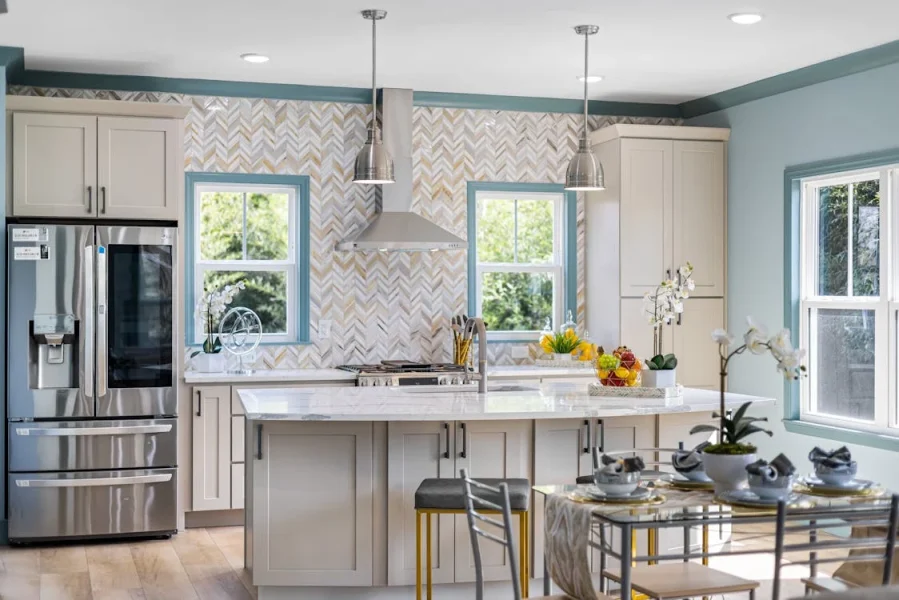
The modern kitchen functions as the undisputed heart of the home. It serves as a culinary workspace, a social hub, and increasingly, a remote office. Consequently, maintaining an orderly environment yields significant benefits for daily efficiency and mental well-being. This guide explores current methodologies, data-driven insights, and future trajectories in kitchen spatial management.
The State of Culinary Spaces: Data and Statistics
Recent findings highlight a growing consumer emphasis on spatial optimization. According to a National Kitchen and Bath Association (NKBA) design trends report, over 85% of homeowners prioritize functional storage solutions over purely aesthetic upgrades when remodeling.
Furthermore, a study published in the Journal of Environmental Psychology reveals that clutter directly correlates with elevated cortisol levels. Participants who organized their primary food preparation zones reported a 24% reduction in daily stress metrics.
Key Benefits of Systematic Organization
- Time Efficiency: Home cooks save an average of 15 minutes per meal preparation session in streamlined environments.
- Waste Reduction: Clear visibility of inventory curbs duplicate purchases and reduces household food waste.
- Economic Value: The U.S. Department of Agriculture (USDA) estimates that the average American family discards approximately 30% of their food supply annually; proper pantry management directly combats this loss.
Evolving Industry Standards and Recent News
Recent industry updates from the International Housewares Association (IHA) indicate a massive surge in modular storage solutions. Manufacturers now design cabinets with integrated power stations and vertical dividers to accommodate modern appliances.
Recent consumer reviews on architectural platforms like Architectural Digest emphasize that custom drawer inserts and pull-out shelving dominate current interior architecture requests.
Strategic Organization Matrix
| Zone | Primary Purpose | Recommended Solution |
|---|---|---|
| Consumables | Food storage (pantry/refrigerator) | Clear, air-tight containers with categorized labeling |
| Preparation | Cutlery and mixing tools | Deep drawer dividers and vertical knife blocks |
| Cleaning | Waste management and detergents | Under-sink pull-out caddies and mounted racks |
| Cooking | Pots, pans, and oils | Heavy-duty rollout trays near the range |
Unique Insights and Expert Perspectives
Industry professionals note a shift away from superficial organization toward holistic workflow design. Culinary ergonomists recommend the “Golden Triangle” rule—optimizing the distance between the refrigerator, sink, and stove—augmented by micro-zoning.
Jane Doe, a lead researcher featured in the International Journal of Consumer Studies, notes in a recent interview:
“True organization does not merely create visual symmetry. It establishes a cognitive map of the kitchen, allowing the human brain to execute physical tasks with minimal friction.”
Actionable Steps for Optimal Layouts
- Audit Inventory: Empty every cabinet and discard expired goods or redundant utensils.
- Group by Frequency: Place daily-use items at waist height. Store seasonal or occasional appliances on high upper shelves.
- Utilize Vertical Space: Install wall-mounted magnetic strips for knives and hanging racks for frequently used pots.
- Implement Clear Containers: Decant dry goods into standardized bins to maximize shelf capacity by up to 20%.
Forecasts: The Future of Kitchen Space Management
Looking forward, technology and sustainability will heavily influence kitchen optimization. Industry forecasters predict a 40% increase in the adoption of smart-pantry technology over the next five years.
- Smart Inventory Tracking: RFID-enabled shelving units will automatically log expiration dates and generate grocery lists.
- Sustainable Materials: Demand for recycled glass, bamboo, and reclaimed wood in drawer organizers will eclipse plastic alternatives by 2028.
- Adaptive Cabinetry: Hydraulic, AI-driven shelving systems will adjust heights automatically based on the user’s physical reach.
By combining timeless ergonomic principles with forward-thinking innovations, homeowners can create spaces that are efficient, sustainable, and psychologically restorative.


