


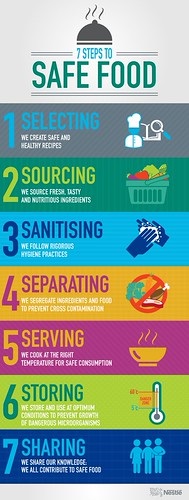
Here are 3 interventions to safeguard safety for ready to eat food
- Halt Cross-Contamination: Separate raw material handling areas completely from post-processing packaging zones.
- Optimize Sanitation: Deploy ATP bioluminescence testing to verify surface cleanliness instantly.
- Monitor Temperature: Maintain strict cold chain integrity; the FDA Food Code dictates keeping refrigerated RTE foods below 41°F (5°C).
| Intervention Strategy | Implementation Focus | Target Pathogen |
|---|---|---|
| HPP (High-Pressure Processing) | Post-packaging pressure application | Listeria, Salmonella |
| Environmental Monitoring | Bi-weekly zone sampling | Listeria monocytogenes |
| Bio-mapping | Air and surface airflow tracking | Airborne spores |
Standards, Science, and Strategies
Ready-to-eat (RTE) foods offer unprecedented convenience, but they also present unique microbiological challenges. Because these products undergo no further cooking steps before consumption, rigorous safety protocols must govern every stage of production.
The Current Landscape of RTE Safety
According to the Centers for Disease Control and Prevention (CDC), approximately 48 million Americans contract a foodborne illness annually. Recent industry news highlights that Listeria monocytogenes contamination remains a primary vulnerability for processors. To combat this, regulatory bodies continuously update compliance frameworks.
Key Regulatory Benchmarks
- FDA Food Safety Modernization Act (FSMA): Mandates preventive controls for human foods.
- USDA-FSIS Directives: Enforce strict environmental monitoring programs for meat and poultry facilities.
Academic Insights and Empirical Data
University researchers emphasize that facility design directly influences pathogen eradication. Dr. Maria Rodriguez, Professor of Food Safety Microbiology at Cornell University, noted in a recent 2023 symposium in Ithaca, New York: “Facility zoning and air-handling dynamics are just as critical to RTE safety as thermal processing.” Furthermore, a landmark study published in the Journal of Food Protection (Vol. 86, Issue 4) revealed that facilities utilizing advanced predictive microbiology software reduced pathogen persistence by 34%.
Forecasts and Predictions
Industry analysts project that by 2028, over 65% of large-scale RTE manufacturers will adopt artificial intelligence-driven optical sorting and real-time biosensors. Professor Alan Henderson of the University of California, Davis forecasts: “The integration of blockchain technology with microbial genomics will allow trace-back capabilities within seconds, transforming recall management entirely.”
Summary
Achieving absolute safety in ready-to-eat production requires relentless vigilance, adherence to academic research, and proactive technological adoption. By implementing rigorous environmental controls and anticipating future regulatory shifts, processors protect public health and secure consumer trust.


