


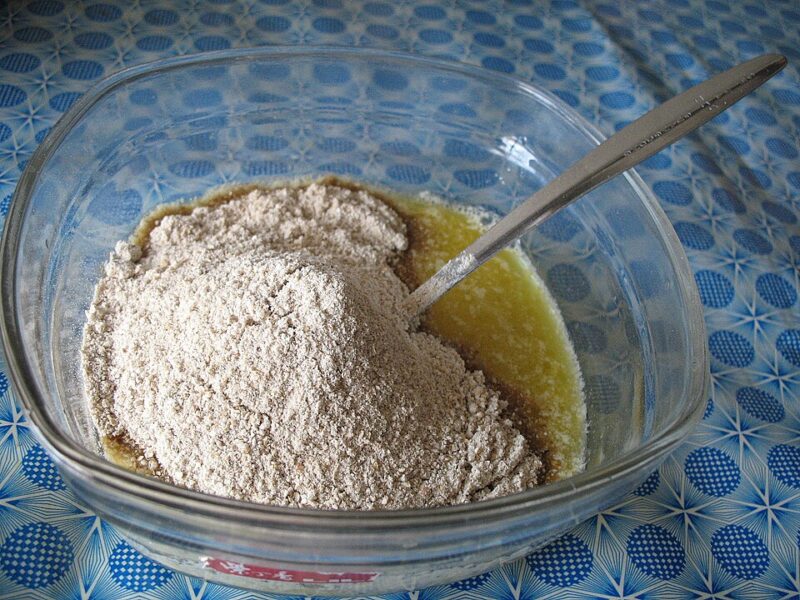
Creating your own dry cornmeal mix guarantees culinary precision and nutritional control. Commercial mixes often contain sodium additives and preservatives. Blending your ingredients at home puts you in direct command of the quality.
Food scientists at Cornell University note that milling whole grains at lower temperatures preserves essential fatty acids. Controlling your grain grind yields superior texture in cornbread, muffins, and crusts.
Nutritional Profile and Dietary Guidelines
Whole grain corn offers complex carbohydrates, dietary fiber, and essential minerals. According to data from the USDA FoodData Central, one cup of yellow cornmeal contains approximately 4 grams of dietary fiber and nearly 7 grams of plant-based protein.
The Dietary Guidelines for Americans recommend that at least half of your daily grain intake come from whole grains. Incorporating homemade cornmeal mix into your meal planning supports this federal health objective.
Essential Ingredients
Baking requires precise ratios. The table below outlines the standard proportions for a balanced, shelf-stable cornmeal mix.
| Ingredient | Standard Proportion | Primary Function |
|---|---|---|
| Yellow Cornmeal | 2 Cups | Structure and traditional flavor |
| All-Purpose Flour | 1.5 Cups | Gluten development and tender crumb |
| Granulated Sugar | 1/3 Cup | Sweetness and moisture retention |
| Baking Powder | 1 Tablespoon | Leavening agent |
| Salt | 1 Teaspoon | Flavor enhancer |
Step-by-Step Preparation Method
- Measure all dry components accurately using flat-topped measuring cups.
- Sift the all-purpose flour, baking powder, and salt through a fine-mesh wire sieve. Sifting eliminates lumps and distributes the leavening agent evenly.
- Combine the sifted mixture with the yellow cornmeal and granulated sugar in a large glass bowl.
- Whisk the dry ingredients thoroughly for two full minutes to ensure complete integration.
- Transfer the mixture into an airtight glass container.
Storage and Food Safety
Proper storage prevents rancidity. Corn germ contains natural oils that oxidize when exposed to light, heat, and oxygen.
The Culinary Institute of America recommends storing dry grain mixes in cool, dark pantries. For extended storage exceeding three months, place your container inside a domestic freezer.
Recent industry reports from the Food and Agriculture Organization highlight the importance of moisture control in grain storage. Ensure your storage vessel remains completely dry to inhibit microbial growth.
Frequently Asked Questions
How long does homemade cornmeal mix last?
Stored in an airtight container at room temperature, the mix lasts for up to two months. Refrigeration or freezing extends this shelf life to six months.
Can I use whole wheat flour instead of all-purpose flour?
Whole wheat flour alters the density and moisture absorption of the final baked product. You may substitute up to half of the all-purpose flour with white whole wheat flour without drastically changing the texture.
Why do I need to sift the dry ingredients?
Sifting aerates the flour and guarantees an even distribution of the baking powder. This prevents bitter pockets of unmixed chemical leavening agents in your finished cornbread.
How do I convert this dry mix into a finished batter?
Combine two cups of your dry mix with one large egg, one cup of milk, and one-quarter cup of melted unsalted butter. Stir until just combined, then bake at 400°F (200°C) for twenty minutes.
Does the grind size of the cornmeal matter?
Fine-grain cornmeal produces a smooth, cake-like crumb. Coarse-grain stone-ground cornmeal yields a rustic texture and a pronounced nutty flavor.


