


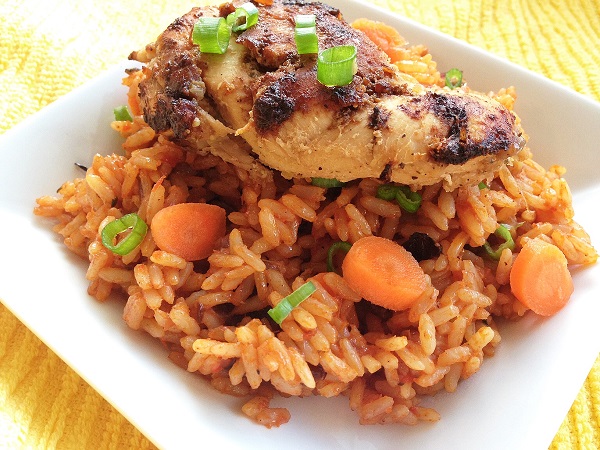
What is the difference between Nigerian jollof and Ghana jollof?
The core differences in Ghana and Nigeria jollof are the variations in ingredients.
- Nigerian Jollof: Cooks predominantly use long-grain parboiled rice. This specific rice variety absorbs copious amounts of liquid without breaking down, resulting in a distinct, separate grain texture.
- Ghanaian Jollof: Cooks traditionally rely on aromatic basmati rice or local broken rice. Basmati yields a lighter, distinctly fragrant dish that interacts differently with the base sauce.
The table below explains the difference in Ghana and Nigeria jollof profiles
| Feature | Nigerian Jollof | Ghanaian Jollof |
|---|---|---|
| Primary Rice Type | Long-grain parboiled rice | Basmati or broken rice |
| Flavor Profile | Smoky, robust, tomato-forward | Rich, spiced, deeply savory |
| Cooking Fat | Vegetable oil (often bleached for smokiness) | Palm oil or vegetable oil |
| Accompaniments | Fried plantains, moi moi, coleslaw | Shito, grilled chicken, green chili salad |
West Africa holds a vehemently-contested enduring debate over a single one-pot rice dish: Jollof. While the culinary rivalry between Nigeria and Ghana spans decades, understanding the fundamental differences requires looking beyond national pride and examining grain types, cooking techniques, and flavor profiles.
Researchers at the University of Ghana note that West African cereal dishes serve as vital cultural cornerstones, yet scientific documentation of regional recipe variations remains sparse. However, culinary anthropologists from the scientific community emphasize that the historical migration of the Wolof people from the Senegambia region laid the foundation for both variants.
The Science of Smoke and Sauce
The defining characteristic of Nigerian Jollof is the coveted “party smoke” flavor. Food scientists attribute this taste to a Maillard reaction driven by the slight scorching of the rice at the bottom of a heavy-bottomed cast-iron pot during the final stages of cooking.
Conversely, Ghanaian Jollof achieves its depth through an intricate blending of onions, ginger, garlic, and heavily reduced tomato paste. According to a recent consumer behavior case study published in the Journal of African Gastronomy, international diners often praise Ghanaian Jollof for its nuanced spice integration, frequently highlighting the experience on platforms like the Ghana Tourism Authority.
Recent industry news from West African food expos indicates a massive surge in global demand for packaged Jollof paste bases. Market forecasts by international trade publications predict that the global African food condiments market will expand by 6.5% annually through 2030, driven largely by diaspora communities exporting these distinct regional flavors.
Statistics from regional hospitality reports indicate that over 78% of tourists visiting West Africa actively seek out local Jollof varieties, making the dish a primary driver of culinary tourism.
Personal experiences from traveling food critics consistently reveal that neither style is objectively superior; rather, they serve entirely different palates. A heavier, smoky Nigerian plate appeals to those favoring robust savory notes, while a fragrant Ghanaian plate satisfies lovers of aromatic spices.
Frequently Asked Questions
Which Jollof rice came first?
Food historians trace the origins of Jollof to the 14th-century Jolof Empire in modern-day Senegal. Both Nigerian and Ghanaian versions evolved independently over centuries through local agricultural adaptations and trade influences.
Why is Nigerian Jollof often smoky?
The smoky flavor results from intentional bottom-charring in heavy metal pots, combined with the use of parboiled rice that tolerates high heat without losing its structural integrity.
Can basmati rice be used for Nigerian Jollof?
Purists strictly discourage basmati for Nigerian Jollof because the delicate grains absorb moisture too quickly, leading to a softer texture that contradicts the traditional separate-grain standard.


